

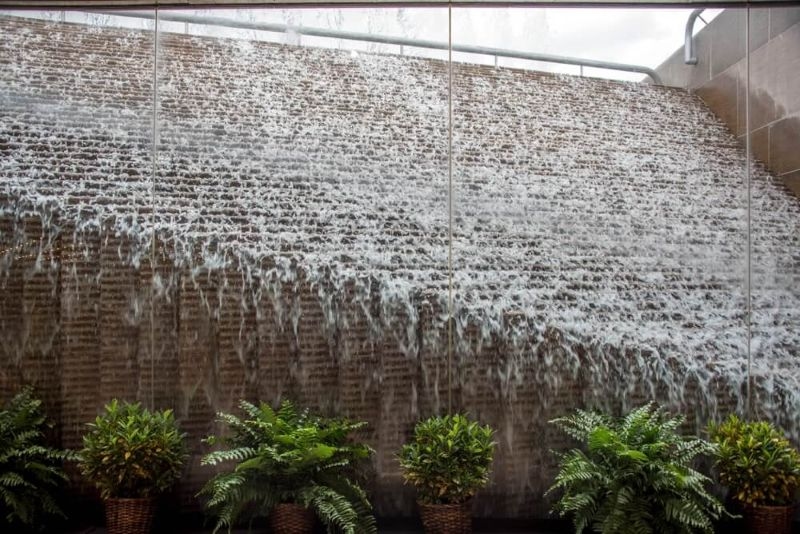
An indoor water wall is one of those features that looks impressive when done right and feels like a mistake when it is not. The difference usually comes down to the surface. People focus on size, lighting, or brand, but the surface is what controls how water behaves, how the wall sounds, and how much work it becomes later.
Indoor water wall surface options are not interchangeable. Some materials look good for photos and fail in real spaces. Others hold up quietly for years. If you are planning an indoor wall water feature, the surface choice matters more than the style.
This article breaks down the materials that actually work indoors, how they behave with water, and what to expect once the wall is running every day.
An indoor water wall is a vertical system where water is pumped to the top and allowed to flow downward across a fixed surface. The water is collected at the base, filtered, and reused. That part is simple.
What changes everything is the surface. It controls flow speed, sound level, splash, mineral marks, and cleaning frequency. A smooth surface behaves predictably. A textured one does not. That is not good or bad. It just needs to match the space.
Indoor water wall surface options should always be chosen with use in mind, not just appearance.
Explore More: How to Use Indoor Fountain Materials for Biophilic Design?
There are many finishes marketed for water walls, but only a few water wall material types consistently perform indoors. These are the ones used repeatedly in homes, offices, hotels, and wellness spaces for a reason.
Glass is one of the most common surfaces used for an indoor water wall. It works because water behaves well on it.
What glass does well:
Glass can be clear, frosted, back painted, or lightly textured. Clear and lightly frosted glass are usually the easiest to live with. Heavily textured glass can look interesting but will show mineral lines faster.
For modern interiors, offices, and reception areas, glass remains one of the most practical indoor water wall surface options.
Stone brings weight, texture, and a natural feel to an indoor wall water feature. Common choices include slate, marble, granite, and limestone.
Why stone is used:
What to consider:
Stone surfaces work best where sound is welcome and cleaning access is easy. Spas, hotels, and large residential walls often use stone because the texture becomes part of the experience.
As a water wall material, stone is about atmosphere, not convenience.
Metal surfaces are common in commercial interiors and contemporary spaces.
Typical metal choices include stainless steel and aluminum. These surfaces create a sharp, controlled look. Water flow is clean and directional.
Why metal works:
Some finishes show water spots more easily, which means regular cleaning matters. When maintained properly, metal remains one of the most reliable indoor water wall surface options.
Don’t Miss: How to Properly Clean and Care for Your Copper Fountain
When people talk about the main types of water wall surfaces, they usually mean smooth versus textured. That difference affects almost everything.
Smooth surfaces
Glass and polished metal fall into this category. These surfaces suit offices, living rooms, and waiting areas.
Textured surfaces
Stone and patterned panels fall here. They work well where sound and visual depth are part of the goal.
Understanding the main types of water wall surfaces helps avoid mismatches between the feature and the room.
Not every space can support glass or stone. That is where alternative materials come in.
Acrylic looks similar to glass but weighs less. It is used when wall load is limited. It allows smooth water flow but scratches more easily. It works best in controlled environments where impact risk is low.
Composite panels are molded to resemble stone or metal. They are lighter and easier to install. While they lack the depth of natural materials, they are practical for custom shapes and tighter budgets.
These options expand indoor water wall surface options when traditional materials are not practical.
There is no universal best surface. The right choice depends on how the space is used.
Questions worth answering first:
Examples:
A good indoor wall water feature fits into the space without demanding constant attention.
Every indoor water wall needs maintenance. The surface determines how much.
Basic expectations:
Glass and metal are easier to maintain. Stone and textured surfaces need more effort. Choosing the right water wall material upfront saves time later.
You may like: Why Choose a Copper Indoor Fountain? Benefits & Styling Tips
Indoor water wall surface options affect more than appearance. They affect reliability. A surface that handles water well stays consistent. One that does not becomes streaked, noisy, or uneven.
Most water wall problems are not mechanical. They are material choices made too quickly.
If the goal is a water feature that works quietly and looks intentional years later, surface choice deserves serious thought.
Glass is often the most practical option. It allows even water flow, shows fewer mineral marks, and requires less maintenance compared to textured materials.
The main types of water wall surfaces used indoors are glass, stone, and metal. Acrylic and composite panels are used when weight or installation limits apply.
Yes. Smooth surfaces produce quieter flow. Textured surfaces increase sound. The water wall material directly affects how the indoor wall water feature sounds in daily use.
This content was created by AI