

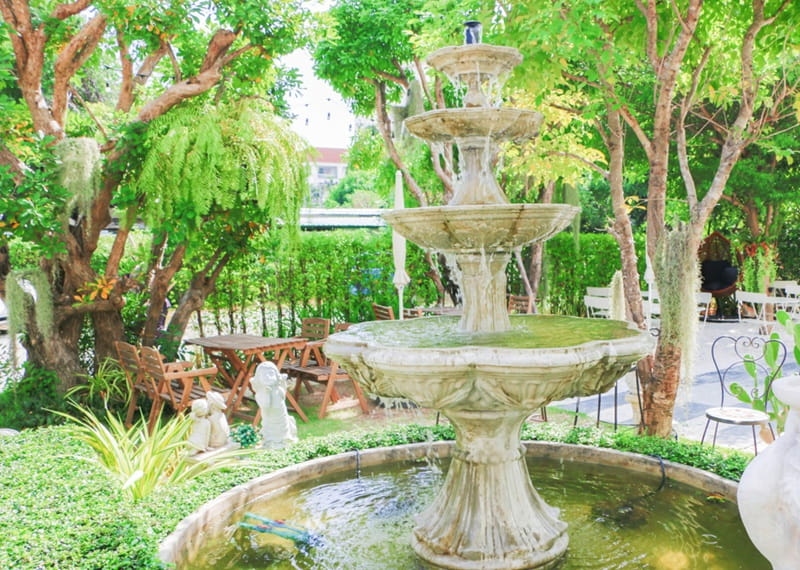
The most important decision you'll make when designing and building a new outdoor water feature is choosing the right fountain pump size. You can make this choice much easier by knowing the specifications for your new feature or existing feature that needs to be replaced. This guide provides all of those specifications in one location, so you do not have to guess at the size of the fountain pump you need or how to select or purchase a specific model from a manufacturer. It also includes a basic size calculator for pond pumps that helps you quickly determine the correct sizes for both single- and multi-height fountains.
If you use a pump that is too small or underpowered, the water will flow slowly, and the water feature will have insufficient water volume for circulation (which can lead to excessive algae accumulation). Conversely, using a pump that is too large will waste electricity and shorten the pump's operating life. The right fountain pump will provide elegance, efficiency, and long-term durability, while helping you reduce your investment over time.
One of the most significant aspects affecting the size of your outdoor fountain pump is the proper amount of water flowing through its system. Water clarity, the lifespan, and energy efficiency of your outdoor fountain pump depend upon how much water it moves through its system.
Water flow, or the amount of water the pump can move, is measured in gallons per hour (GPH). A general rule of thumb for establishing pond and outdoor fountain pump size is that for every 1 inch of the spillway width, you will want approximately 100 GPH flowing from the fountain.
When selecting a pump, it is important to consider not only how much water is flowing through, but also how high the water must be lifted from the pump to the fountain's highest point.
The term 'head height' is used synonymously to describe the vertical distance your water must be lifted by the pump from the base of the pond to the highest outlet of the fountain. Your pump should be rated to produce a flow at least 10% greater than the maximum height your fountain can push water. You may find manufacturer performance charts useful for deciding which manufacturer’s pumps are rated to lift/gph at different head heights.
Explore This Topic: How to Use Indoor Fountain Materials for Biophilic Design?
Pumping costs can be calculated using several methods. The Department of Energy's rule of thumb for Energy Efficiency suggests that using the correct size of outside fountain pump will waste less energy, producing an adequate amount of water flowing through your fountain, because the pump motor will use energy as efficiently as possible. Using a pond pump size calculator method in conjunction with the number of hours you will be pumping during a 24-hour period, multiplied by the pond volume (in gallons) will also help you properly size your outdoor fountain pump while at the same time keeping your costs as low as possible.
The fountain pump size guide will help clarify how to select a fountain pump system, providing a step-by-step breakdown of the process.
You have to measure the fountain basin volume (l×w×d), find out the total head height, and determine the spillway width. Most small decorative fountains will work okay with a 50-200 GPH water fountain pump.
Most medium-sized, tiered fountains will require a 250-800 GPH water fountain pump. Large statement pieces usually require a flow rate of 1,000 GPH or higher. Following this measurement technique is similar to using a pond pump size calculator, which ensures you circulate your fountain water every 1 to 2 hours.
The design of your fountain will also affect your choice of fountain pump. For example, if you want your fountain to have a gentle bubbling effect, you'll want to choose a pump that can produce lower GPH than if you were going to build a fountain that has a dramatic waterfall. If you are building a multi-tiered fountain, you'll want to select a pump that can deliver moderate to high gph with stable pressure.
By knowing how to choose a fountain pump flow, you can avoid the problems of splashing, overflow, and weak streams.
Related Resource: Wooden Indoor Fountains: Add Warmth & Elegance to Your Home
Select a water fountain pump that fits your fountain installation needs (a submersible pump is most common; a magnetic-drive pump is more energy-efficient than a direct-drive pump). If you're replacing an existing fountain pump, compare the specifications of your new pump before making a decision.
Is it time to replace an old unit? Replacing the water fountain pump correctly can restore your system to maximum efficiency.
The three main indicators (reduced water pressure, strange sounds, or frequent clogs) will let you know it is time to replace the pump.
When replacing the pump, it is also important to look at the new size of the fountain pump. Homeowners often discover that their existing unit is either too large or too small for the intended use.
Using a simplistic pond pump size calculator method:
Multiply (in gallons) by your turnover amount per hour. (Example: A 200-gallon fountain turning over every hour will require an absolute minimum of a 200-gallon-per-hour pump). Add your head-height calculations back to this number to arrive at the proper size fountain pump.
By using this method, you will improve the filtration rate, the oxygen content, and the overall longevity of your system.
When searching for an adequate pump for your outdoor fountain system, consider power, efficiency, and reliability to determine which model best fits your needs.
Pump features to look for include:
Using high-quality pumps that are properly dimensioned for outdoor fountain systems will provide quiet operation and be made from corrosion-resistant materials, making them the perfect choice for an elegant garden.
The following considerations should be taken into account depending upon Clermont conditions:
Cold climates:
Pumps must be unloaded or winterized to prevent freezing damage.
Warm climates:
Continuous water flow should always be maintained to prevent algae growth.
Knowing how climatic conditions impact the selection of fountain pumping units will help maximize their service life.
Explore This Topic: Indoor Fountains Guide to Add Calm and Style to Your Home
You can still be an experienced homeowner and make sizing errors. Here are some mistakes to watch out for:
Using a strategic fountain pump size guide can help ensure you do not have to replace your pump at excessive expense.
Fountains are not just beautiful features but also an investment. Choosing the appropriate size for your outdoor fountain pump is key to achieving efficient water flow, saving energy costs, and enjoying trouble-free operation for years to come.
Using a reputable fountain pump sizing guideline when determining your ideal fountain pump system, applying an actual pond pump size calculator, and understanding when to replace your outdoor fountain pump will ensure that your fountain continues to enhance your outdoor living environment. The end result will be a spectacular focal point with the best outdoor fountain installation pump designed to create beauty with no limitations.
Measure the basin's total volume; calculate the head height and the required water flow. Use a size reference and/or a size calculator for all GPH ratings to ensure accurate selection of the fountain pump.
A pump that is larger than required will cause excessive splashing and result in unnecessary water and energy loss. Proper selection of your outdoor fountain pump size will help ensure consistent flow and prevent unnecessary wear on your pump or the need for an expensive replacement.
The average lifespan of most pumps is 2-5 years, depending on maintenance and usage. If water flow is reduced or noise is increased, consider replacing your fountain pump with the best outdoor fountain pump.
This content was created by AI